
The Problem with Traditional Pedalboards

Live Performance

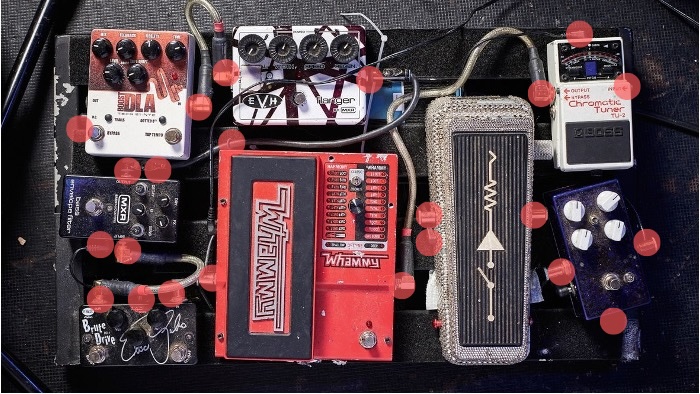
Traditional pedalboard showing cable failure points
Red dots show potential fail points

Traditional pedalboard showing potential connection failures

Mid-set → one cable fails → performance stops. The audience notices. Your reputation suffers. Traditional daisy-chain setups create 50+ failure points between your guitar and amp.

Traditional Signal Flow

GUITAR IN Wah active patch Distortion active patch Delay active patch Reverb active patch Chorus active AMP OUT Signal flowing — click a pedal or patch cable to fail it

How MIP-S Keeps the Show Running

MIP-S Auto-Bypass

Click a cable or pedal to fail that loop — main signal keeps flowing GUITAR IN AMP OUT MIPS core — central hub Wah active EQ active Distortion active Reverb active Compressor active Chorus active Delay active Tuner active cable (click to fail) dead (failed) All 8 pedals active — signal flowing normally

MIP-S pedals run in series but behave like parallel — each loop is individually monitored and isolated. When a pedal or cable fails, that loop is instantly bypassed and removed from the signal chain. The rest of your board keeps running. The show goes on.

One Cable. Total Control.

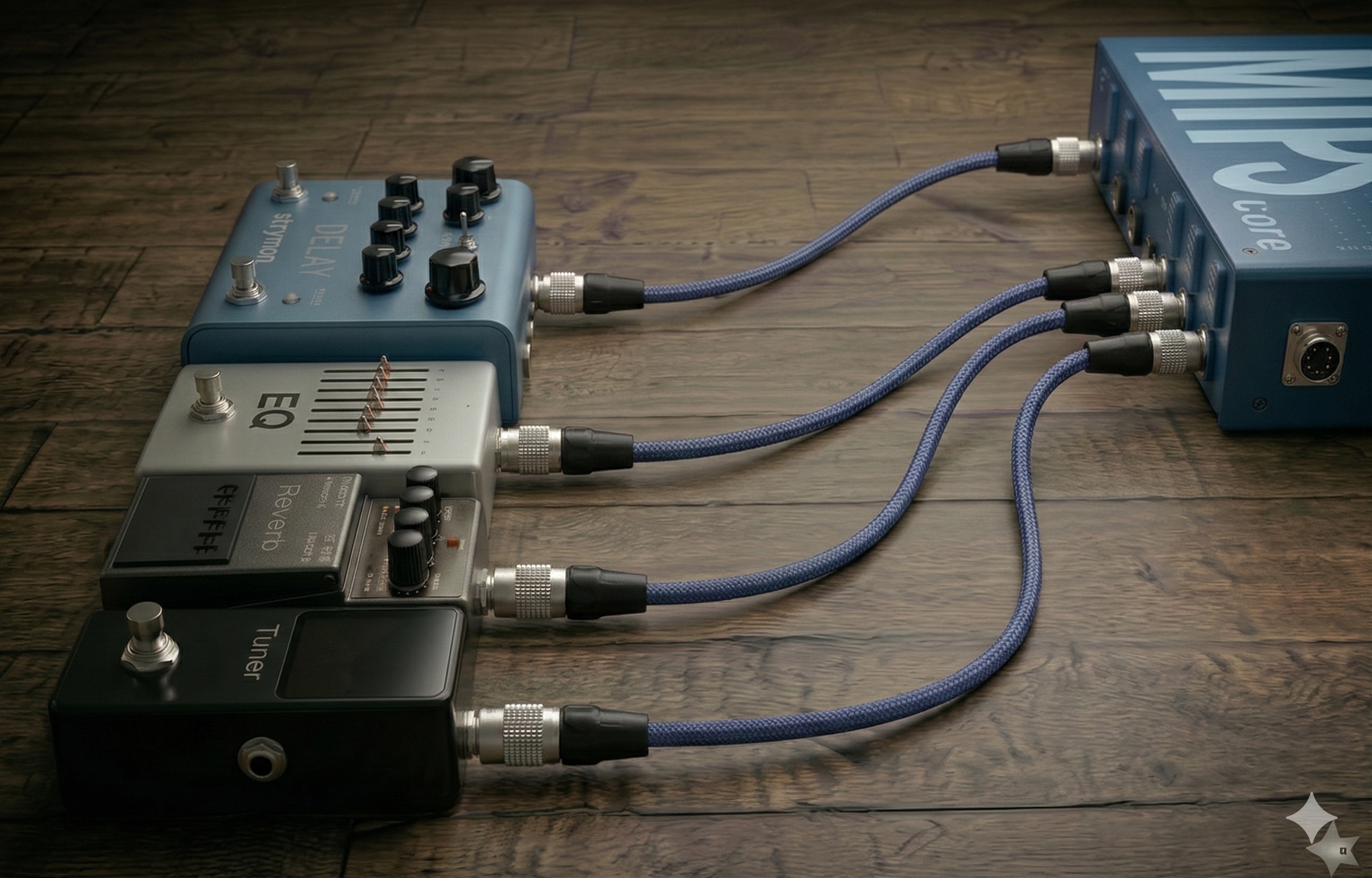
Because all audio, power, and MIDI run through a single cable to the MIP-S core, you get complete pedal control and MIDI programming built in — no controller box, no extra hardware. Build scenes, set tempos, automate any function from your phone or foot controller. Nothing else on the market does this in one unit.

8

Pedal Loops
Expandable with Multiple Units

Auto

Fault Detection
Zero Signal Failure

1

Unified Cable

Wireless

Control + App
Unlimited Flexibility

100%

Analog Signal

What Makes MIP-S Different

100% Analog

100% analog signal. True bypass. No degradation, no latency, transparent tone when loops are active. Studio-grade signal integrity.

Use Your Pedals

No new pedals to buy, no new pedalboard. MIP-S loves your gear and helps you make the most of it.

Fault Detection

Intelligent monitoring of each pedal loop. Auto-bypass on failure detection. Signal continuity guaranteed.

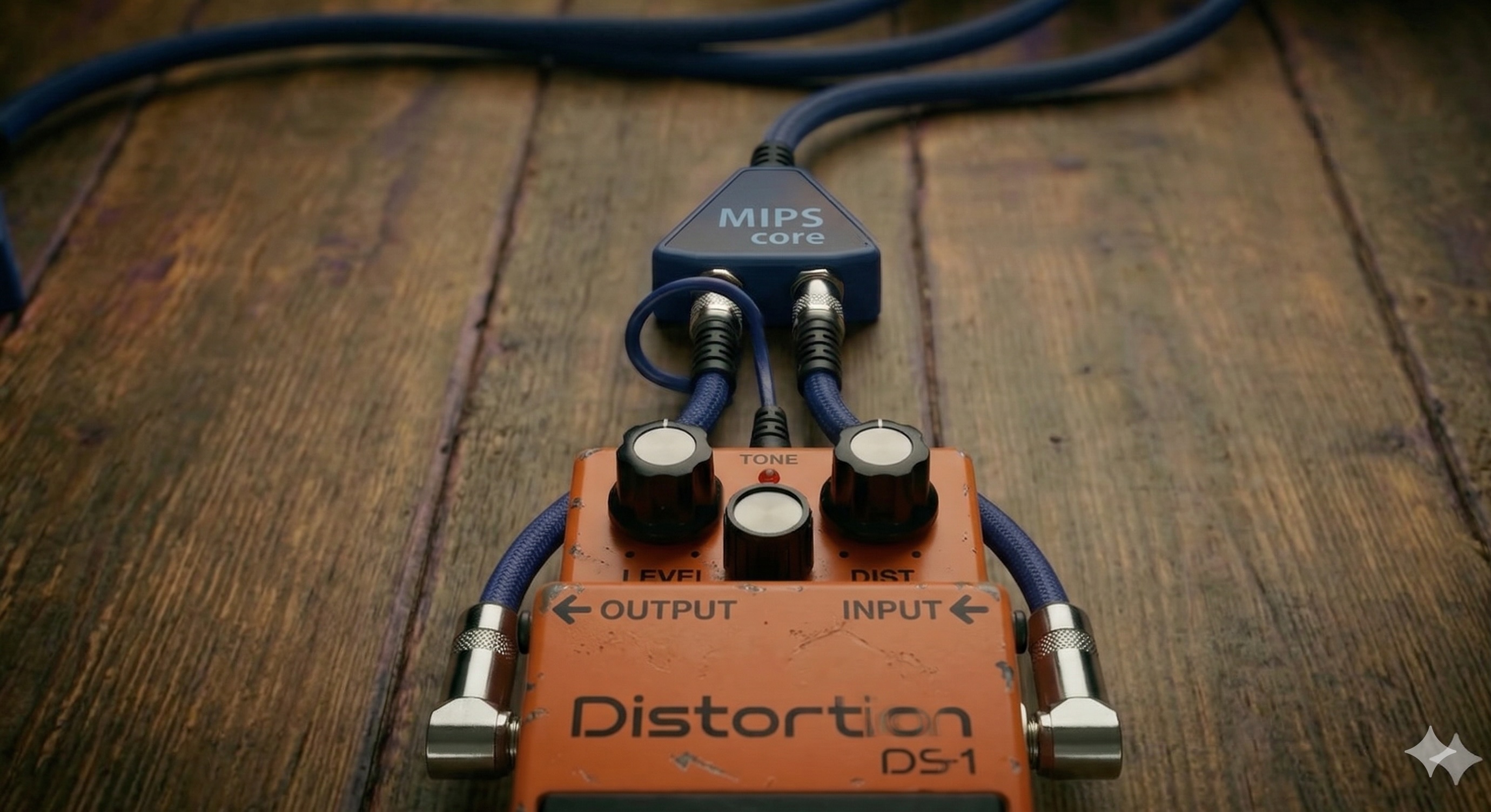
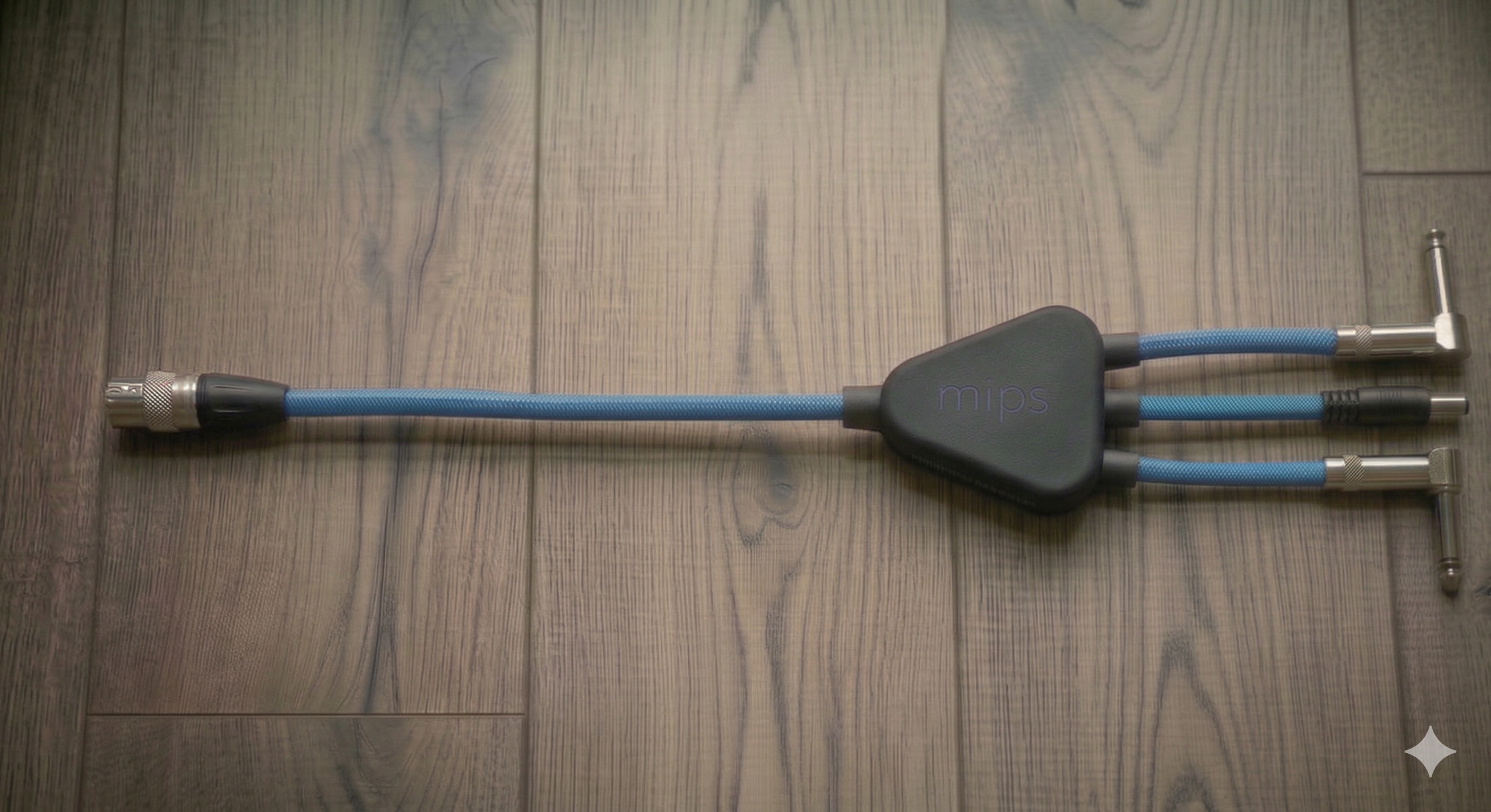
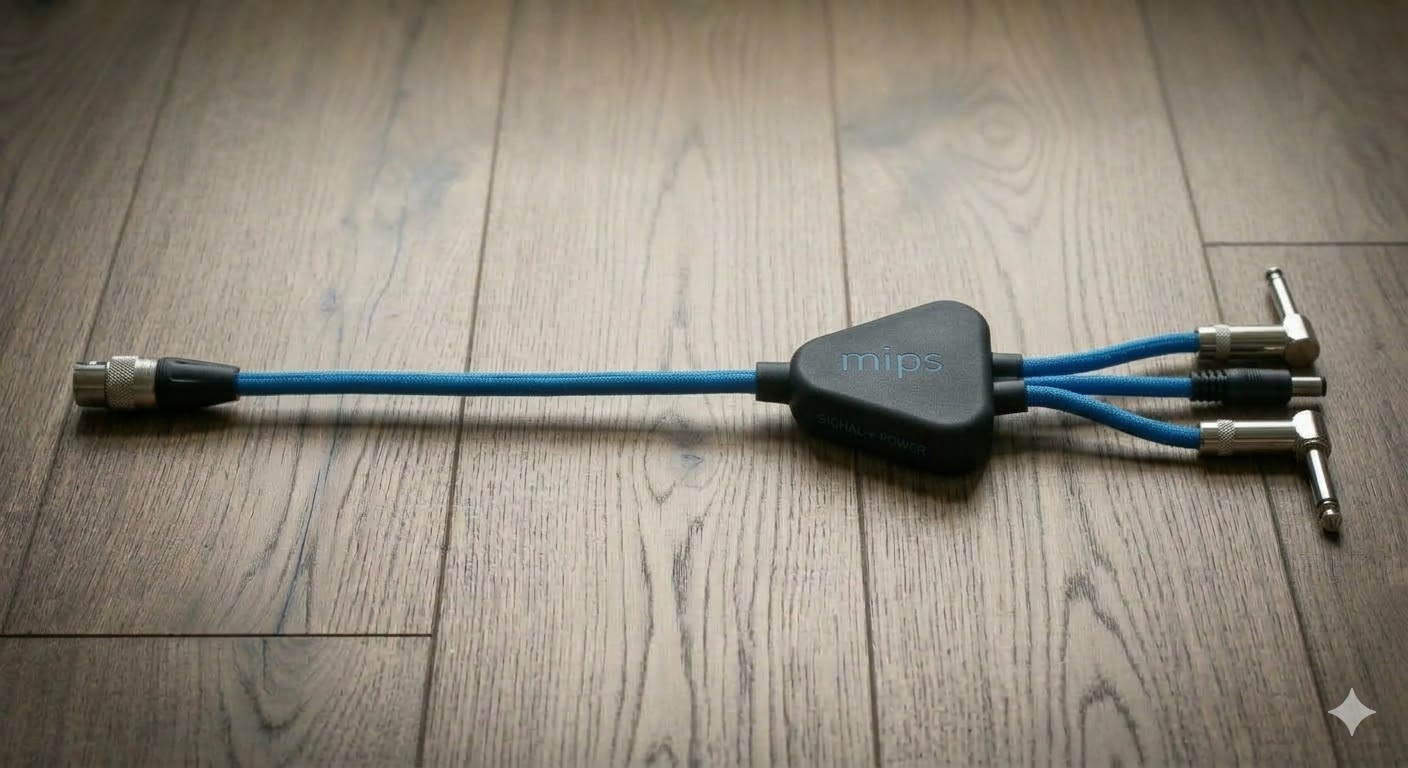
MIP-S unified cable showing breakout adapter

Unified Cable

One cable per pedal carries audio, power, MIDI, and fault detection signals. Eliminates cable spaghetti.

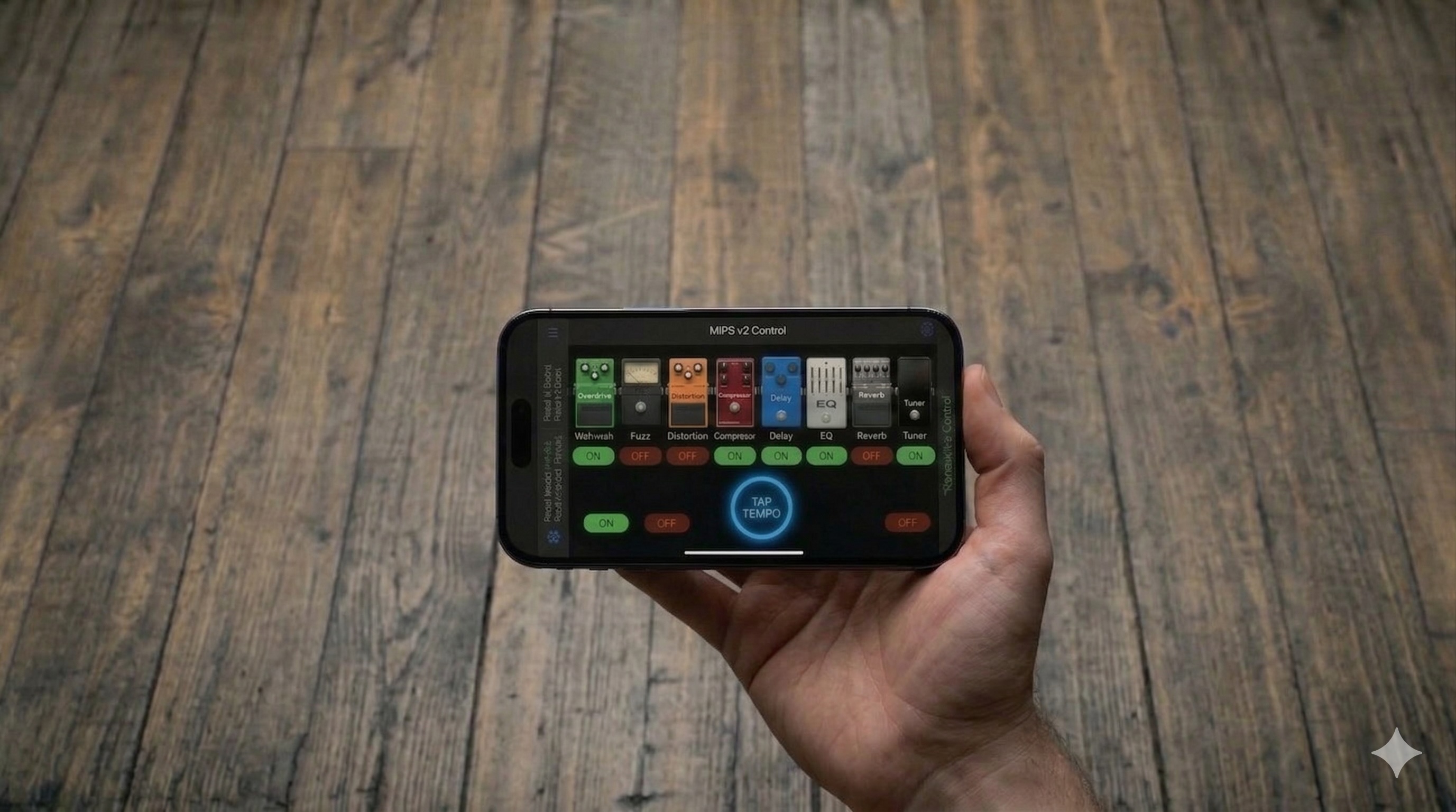
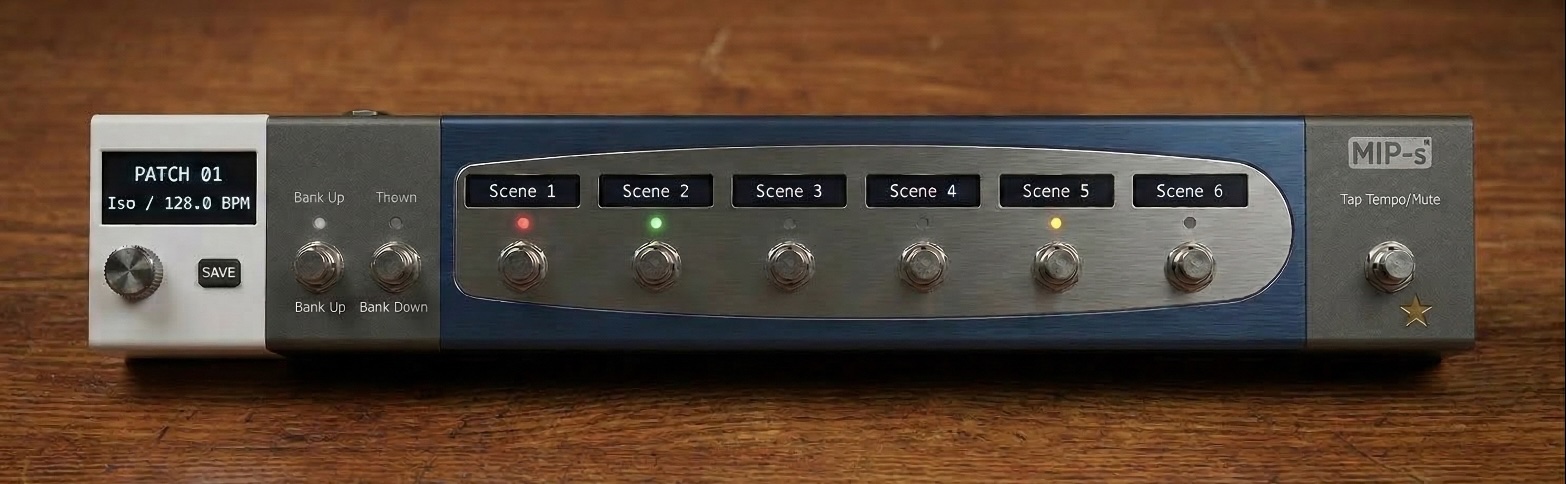
MIP-S app and foot controller

Full MIDI Control

Set up your songs, lead patches, delay times, chorus bumps—anything you can think of—with our app and wireless foot controller. You can even leave the pedals in their case and just use the controller.

Patented Tech

Patented technology with CIP PAF for MIP-S V2. Discrete loop series architecture with automatic bypass. Proven on tour with V1.

The Industry Play

Direct Integration for Manufacturers

MIP-S Unified Connector

New industry standard: Licensing creates recurring revenue. Granted patent + pending CIP create defensible IP moat.

AUDIO

Single pin connector replaces traditional I/O jacks. MIP-S native pedals integrate directly without breakout cables.

MIDI

Built-in MIDI. Scene switching and automation without extra development.

POWER

Centralized power delivery eliminates per-pedal supplies. One MIP-S connection provides the correct voltage automatically.

Technical Specifications

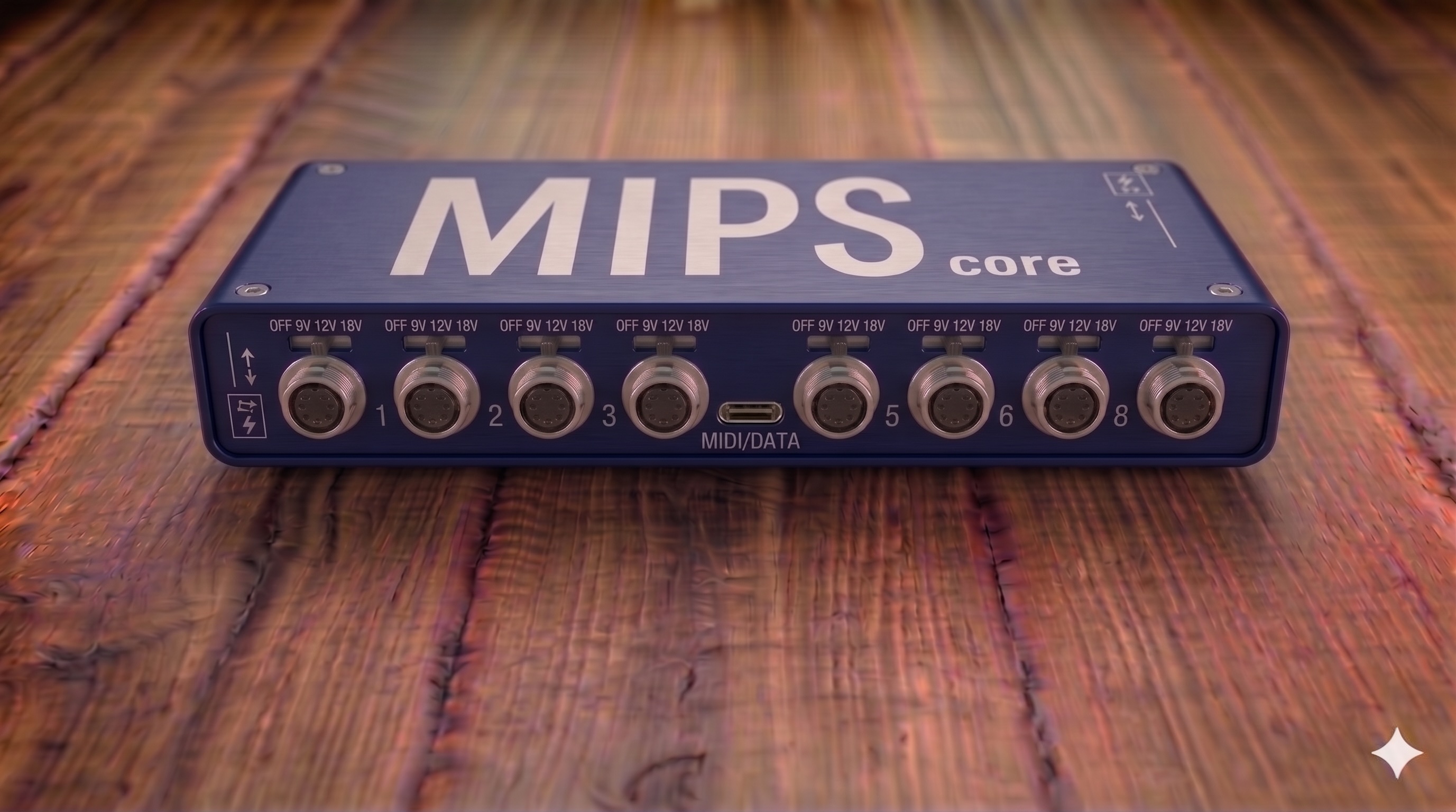
Number of Loops 8 discrete monitored loops
Switching Type MOSFET relay (true bypass)
MIDI Implementation Full MIDI I/O, 48 presets
Power Output Multi-voltage (9V, 12V, 18V)
Connectors Neutrik locking (tour-grade)
Auto-Bypass Latency < 100ms (imperceptible)
Enclosure Anodized aluminum chassis
Dimensions 8" × 4" × 1.5"

MIP-S V1

We built V1, took it on the road, and it worked. Real gigs, real signal chains, real failure conditions — and it held up.

But touring with it taught us things a lab never could. Every edge case, every workflow friction, every moment where it was good but not right became a design requirement for V2. That's why we're building V2 before we go to market — because we've already seen what "close enough" looks like, and it's not what we're shipping.

MIP-S V1 in action

Join the Waitlist

MIP-S V2 is currently in development. Reserve your unit and be among the first to experience fault-tolerant pedal infrastructure.

Pre-Order Now ($599) Investor Inquiry

The Story

In 2017, Dan was mid-set with They Might Be Giants when one cable gave out and the whole pedalboard went dark. Show over. Band waiting. Crowd confused. And here's the thing — it wasn't the first time it had happened to him.

Something clicked. Traditional pedalboards are basically one long daisy chain of cables, which means one bad connection anywhere in the line kills everything downstream. It's a fragile, annoying system that guitarists have just learned to live with since forever.

Dan decided he was done living with it. He had the idea. The team built it. MIP-S is the result.

Dan Miller

Founder

Grammy-winning guitarist, They Might Be Giants. 20 years touring professionally. Built MIP-S to solve his own recurring cable failure problem.

Scott Bozack

Electrical Engineering

Tour Manager and FOH Engineer for They Might Be Giants, Indigo Girls, Meshell Ndegeocello, and OK Go. Decades on professional tours. Designed the fault detection circuitry and power management system. Knows what breaks on the road and how to prevent it.

Joe Transue

Mechanical Engineering

Enclosure design, connector engineering, and production-ready mechanical specifications. Responsible for translating the V2 concept into manufacturable hardware. Focused on durability, thermal management, and field serviceability.